1 min read
Our Golden Triangle Is Wearing Thin
I came off my first clinical rotation feeling defeated. It had not been a good experience and I was quietly questioning whether I had made the right...
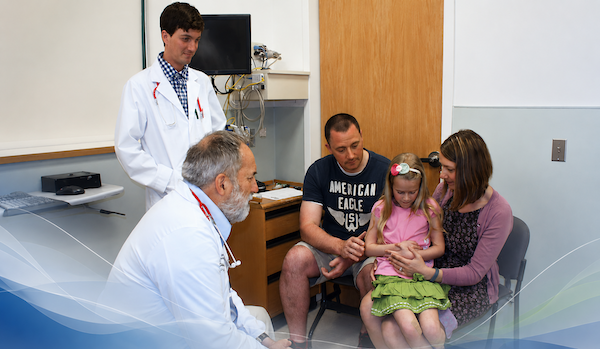
There was a girl who kept coming back.
She was young, from a family without many resources, and her asthma just wouldn't respond. We had tried everything — adjusted her medications, reviewed her regimen, ruled out the obvious triggers. Her parents were dedicated and frustrated in equal measure, and so were we. During a teaching rounds session, the students and residents chose her as their challenging case, presenting her to a retired pediatrician who volunteered one morning a week. He sat down, unhurried, and began asking questions we had already asked. Then he asked one we hadn't: "Do you have any new furniture in the house?"
They did. A donated couch from a neighbor. She slept on it often.
"And do they have pets? Do they smoke?"
Two cats.
No more tests. No more medication trials. Just a couch removed from a house, a severe cat allergy confirmed, and a little girl who finally got better. The mystery wasn't solved by a new diagnostic algorithm or an advanced imaging study. It was solved by a physician who stayed curious, stayed patient, and asked one more question.
That's the clinician we used to aspire to be. I'm not sure we still do.
Something shifted in health professions education over the past two decades — not all at once, and not by anyone's intention, but unmistakably. The forces that shaped it were structural, economic, and cultural, and they compounded each other in ways that were hard to see clearly until the effects were already embedded. This post is an attempt to name what happened, why it matters, and what educators can still do about it.
The cascade began with a genuine problem. Pre-clerkship grading was creating real harm — the pressure of tiered grades in the basic science years drove rising rates of anxiety and depression, and schools responded, reasonably, by moving to pass/fail. When Step 1 followed, going pass/fail in 2022, the intent was the same: reduce the pressure, restore balance, let students learn.
The relief was real. So were the unintended consequences.
With pre-clerkship grades and Step 1 scores no longer available as residency screening tools, Step 2 became the last quantitative signal standing. Shelf exams — already used to bring some standardization to the notoriously difficult work of assessing clinical performance — took on new weight in clerkship grades. And students, responding rationally to the incentives in front of them, began optimizing accordingly.
The result, on the wards and in the clinics, is something most clinical educators recognize immediately. Students complete their patient care work and ask to leave — not because they are disengaged, but because they are doing what the system is telling them to do. The hours they used to spend waiting for a lab result, drifting into a consultant's hallway conversation, sitting with a patient's family because there was nothing else to do — that unstructured, generative, irreplaceable clinical time — have been traded for another block of questions in a commercial test prep queue.
The faculty who teach them feel it. You invest in a student because they invest first — because you remember being the novice who felt stupid and took everyone's time, and you want to be the person who leaned in for you. You love the dumb question. You love the aha moment. You love learning from them, seeing the profession freshly through their eyes. So when a student's body language makes clear that you are standing between them and their next queue of test-prep questions, you recalibrate your expectations — and let them go.
But a new clinician, in some small measure, has been lost.
The conditions that actually build a great clinician cannot be compressed into a question bank.1 Patient after patient. Taking a history, doing a physical exam, putting it together, committing to a diagnosis and standing by your thinking. Following a patient over time to see if you were right, or where you need to adjust. Making mistakes, owning them, fixing them. The iterative, relational, cumulative formation of clinical judgment is built in clinical youth, or it is built much harder, much later.
The students who feel this most acutely are the ones who want to be there. Who feel the pull of genuine clinical curiosity and watch their peers optimize and wonder if they're falling behind. For them, the conflict is real and the cost is high. They deserve better than a system that puts them in that position.
To be sure, the students aren't the problem. They are carrying real debt, facing a high-stakes match, and navigating incentive structures they didn't design. When the system consistently rewards scores over demonstrated clinical skill, studying for scores is the rational response. The problem is a system that drifted, step by step, into measuring the wrong things and calling it rigor.
Clerkship and program directors know this. Most of them feel it in their bones. What they sometimes need is permission to act on what they know.
The first thing worth reclaiming is the role itself.
The clerkship director is not an administrator who schedules rotations and manages evaluations. She is the guardian of clinical formation — the person most responsible for ensuring that the next generation of clinicians learns to think, not just to score. That role carries real agency, and it requires the willingness to use it: to name explicitly to students what clinical learning is building in them, to stand firm when they push back, and to hold the line institutionally — against hospital productivity pressure that treats teaching faculty as a billing resource, and against school-level pressure that over-weights shelf scores in the final clerkship grade.2
The second thing worth reclaiming is the standard.
No patient has ever asked their physician what they scored on Step 2. They ask, in the ways patients ask, whether this person will really see them — will listen, will think, will stay curious, will get it right. That is the standard clinical educators were trained to uphold. It has not been superseded. It has just been crowded out.
The solution students will actually embrace isn't one that asks them to choose between clinical learning and a competitive residency application. It's one that makes clinical excellence visible — assessable, documentable, and legible to the programs trying to select the best residents. Beat the test prep culture at its own game, but the right way and for the right reasons. The sweat equity of genuine clinical formation needs to show up somewhere that matters.
Clinical competence cannot remain an assumed byproduct of clinical experiences. Skills and judgment have to be deliberately taught, practiced, and coached — and measured with enough rigor and utility to actually move learners forward. As students work through daily patient care, confront uncertainty, commit to a conclusion, and implement their plans under supervision and guidance, they need and deserve objective observations and useful feedback that moves them along the path of clinical growth, and makes that growth count.
As long as their true competency remains opaque to residency programs, students will keep prioritizing the measures that aren't. Educators need credible ways to show how a learner gathers information, forms and revises a diagnosis, responds when they're wrong, and improves over time. When that growth becomes legible — when it can sit alongside a shelf score and be taken seriously — we will have rebuilt the incentives around something closer to what we actually mean when we say a learner is prepared.
The patient must remain the north star in every decision. Scores matter — they are the gateways to the responsibility of caring for another person. But keeping the patient visible, keeping that responsibility in view, is what reminds students — and educators — what the score was always meant to unlock: the privilege of becoming someone a patient can trust.
The retired pediatrician who solved that little girl's asthma wasn't working from a question bank. He was working from decades of patients, questions, mistakes, corrections, and the stubborn refusal to stop wondering. That capacity is still what we are here to build. It is time to reimagine what "prepared" means. And we are the ones who get to decide.
In the next post in this series, I want to explore the most powerful force now entering this conversation — one that could accelerate and strengthen everything we've described here: the impact of AI on clinical education, and what practicing alongside it will require of the clinicians we are training today.
 How Aquifer Is Approaching This
At Aquifer, our mission compels us to ask: how do we help students become clinicians patients deserve? We don't believe the answer is asking students to choose between clinical learning and performing well on assessments. The challenge is to design learning experiences where those goals reinforce one another. That has guided our work for years as we built authentic, patient-centered cases designed to develop clinical knowledge and reasoning — not simply reward recall. Increasingly, it has also meant helping educators see that development in real time — tracking how knowledge and reasoning grow together, and building evidence of readiness that extends beyond a single score.
Reimagining clinical reasoning is ultimately about reimagining what we value. When we make clinical competency visible, measurable, and worth rewarding, we begin changing the incentives that shape learning. We give students permission to invest in the habits that transform them into thoughtful clinicians. That is a future worth building together.
To learn more and access our playbook, see Clinical Learning, Reimagined.
Reference
1 Hernandez CA, Daroowalla F, LaRochelle JS, et al. Determining Grades in the Internal Medicine Clerkship: Results of a National Survey of Clerkship Directors. Acad Med. 2021;96(2):249-255. doi:10.1097/ACM.0000000000003815
2 Ryan MS, Bishop S, Browning J, et al. Are scores from NBME subject examinations valid measures of knowledge acquired during clinical clerkships? Acad Med. 2017;92(6):847-852. doi:10.1097/ACM.0000000000001535

1 min read
I came off my first clinical rotation feeling defeated. It had not been a good experience and I was quietly questioning whether I had made the right...

1 min read
Today, many are picturing morning rounds that will soon look like this:

2 min read
One of the most challenging transitions that medical students make is from the pre-clinical years to the clinical/clerkship years....