1 min read
Beyond Correct: Confidence Matters in Clinical Learning
Many educators have had the experience of reviewing assessment results and wondering whether the scores tell the whole story. Assessments can be an...
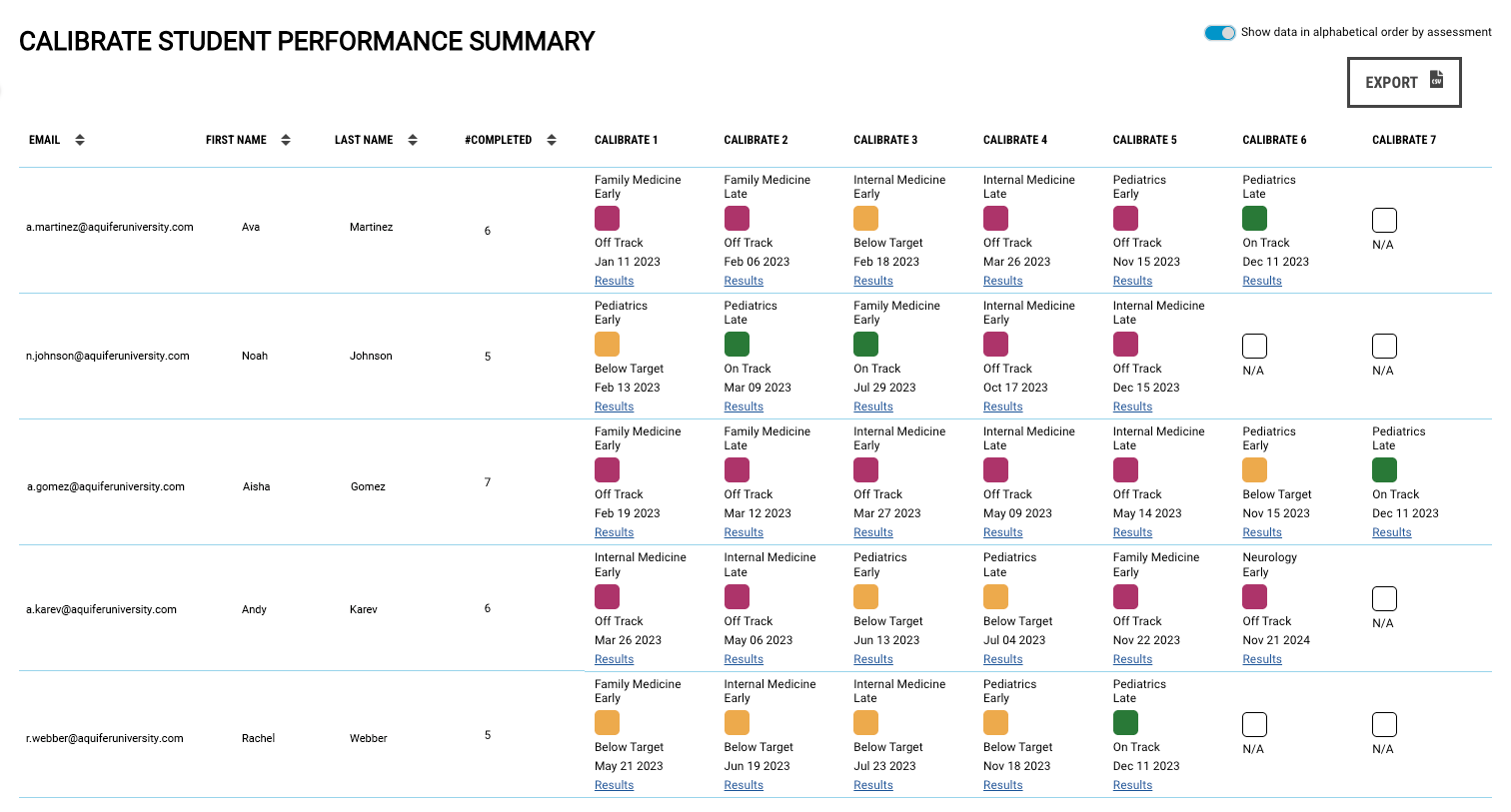
In clinical education, we frequently discuss the importance of “closing the feedback loop”—ensuring that learners not only receive feedback but also act on it, adapt, improve, and reflect on their performance. Unfortunately, many systems tend to stop after the feedback is given. However, tools like Calibrate and PracticeSmart provide educators with concrete data and a structured pathway to guide learners from insight to action.
Below is an overview of how these tools can be integrated into a feedback-loop process to help identify, support, and track students who may need additional assistance.
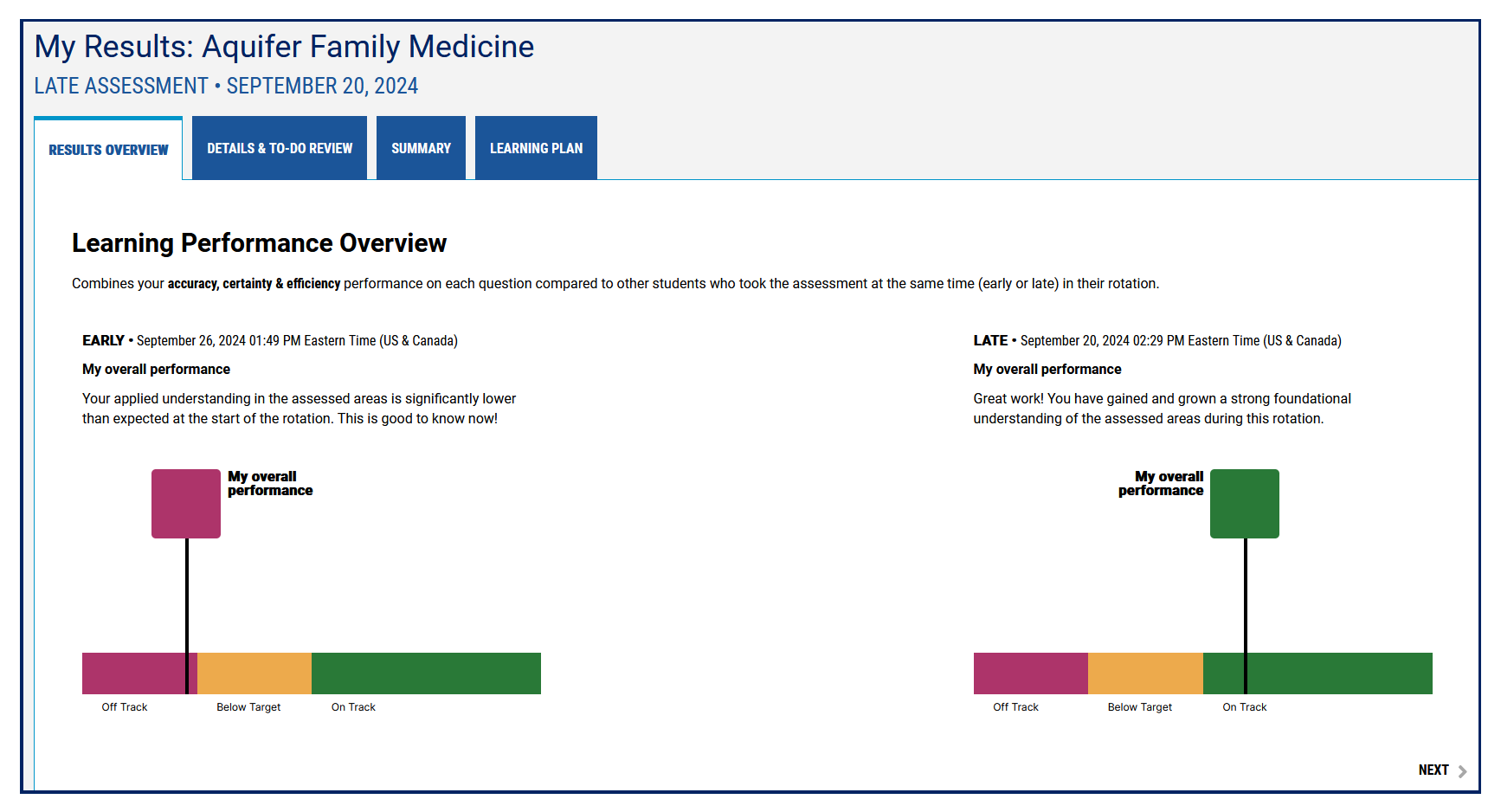
Calibrate is designed as an assessment for learning, not just of learning. Students complete an early and a late version of the assessment during a clerkship or course. Each question asks students not only for an answer but also for their certainty about it. That combination of accuracy + certainty helps uncover not just knowledge gaps, but misaligned metacognitive judgment (overconfidence, underconfidence).
From the faculty side, Calibrate offers dashboards that surface:
This layer gives both students and faculty a shared, data-anchored starting point: “Here’s where you are” — including blind spots that purely correct/incorrect scoring would miss.
Once the diagnostic is complete, faculty or coaches can step in to help the learner interpret the data and plan. This is where the feedback loop moves from static feedback to interactive growth.
Because Calibrate assessments are linked to Aquifer case content and teaching points, students are directly connected to content that can support their learning.
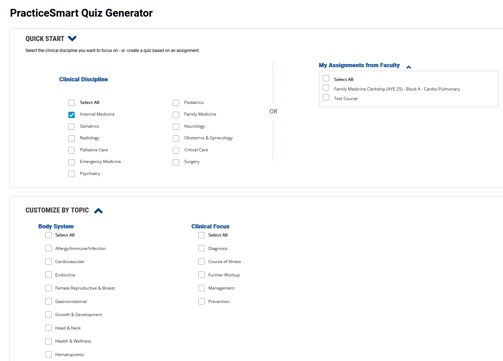
Calibrate is a useful tool for uncovering strengths and weaknesses. When paired with PracticeSmart, the student-directed clinical reasoning question bank, the student is empowered to dive deeper into their gaps and uncover more detailed information. Students are encouraged to deploy PracticeSmart as part of their action plan. PracticeSmart is…
The feedback loop can be closed by revisiting and monitoring improvement.
Over time, the system becomes a continuous improvement loop: assessment → reflection/coaching → practice → reassessment → revised goals.
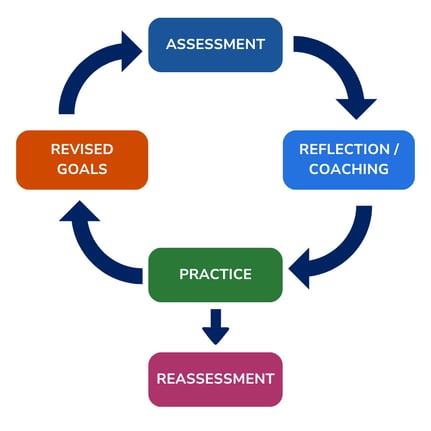
The feedback loop in medical education involves more than just giving comments—it’s about ensuring learners understand where they are, acting on guidance, and evolving over time. By combining Calibrate’s rich data with PracticeSmart’s self-directed question practice and wrapping both in coaching and monitoring, programs can operationalize a robust closed-loop feedback system. Students become more self-aware, coaches more targeted, and curricula more responsive — ultimately supporting learners who need extra help to reach their full potential.
Ready to implement these insights? Schedule a curricular consult with our team to explore how performance data can directly inform your program’s next steps.

1 min read
Many educators have had the experience of reviewing assessment results and wondering whether the scores tell the whole story. Assessments can be an...
1 min read
Faculty play a central role in shaping how learners engage with formative assessments. A recent study in Family Medicine (Wingrove et al., 2025)...