The Hardest Thing to Teach in NP Education—and Why It Matters More Than Ever

The Hardest Thing to Teach in NP Education—and Why It Matters More Than Ever


Some of the most important skills in nurse practitioner (NP) education are also the hardest to teach.

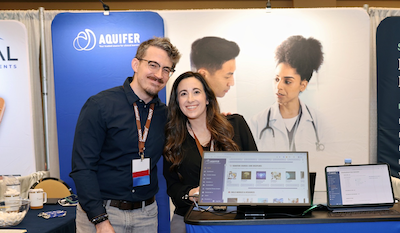
Across sessions and conversations at NONPF last week, I kept hearing different versions of the same challenge. NP educators are preparing students for clinical environments that are complex, fast-moving, and often unpredictable. Foundational knowledge is critical, but it’s only the starting point.

As attendees were reminded in the Opening Keynote by Kenya Beard from Mercy University, “Knowing is not enough; we must apply.”

That idea stuck with me. Because what happens between knowing and doing—how learners develop judgment, confidence, and the ability to act—is where the most important work lives.

“Knowing Is Not Enough”: The Responsibility Behind the Work

I’ve spent much of my career working in spaces where success depends on more than just following a process. There’s always a foundation—frameworks, best practices, the “right” steps—but the real work shows up in how those things and sometimes the intangibles are applied. I’ve often heard this referred to as “the blend of art and science.”

That is exactly what was reflected in so many conversations at NONPF this year.

We can teach the structure of a patient encounter. We can outline how to build a differential diagnosis or walk through history-taking. But becoming a clinician—someone who can navigate uncertainty, recognize patterns, and make sound decisions under pressure—develops over time.

It requires practice. Repetition. Reflection. And space to make mistakes and learn from them.

Many of the sessions I attended reinforced how intentional this process has become. Educators are building preclinical experiences focused specifically on clinical reasoning, using tools like illness scripts, diagnostic schemas, and structured reflection. Others are incorporating simulation experiences that push students to explain their thinking, identify breakdowns, and work through complex scenarios. In almost all of these cases, taking the time for self-reflection and metacognition was almost more important than the outcome. Ensuring students take the time to understand how they got there, why, and how they might approach the scenario differently next time. That kind of learning takes design, intention, and the types of experiences that don’t exist in traditional learning resources.

It also requires something we don’t always talk about explicitly: giving students the space to act on their thinking.

Clinical reasoning doesn’t stop at forming a differential or arriving at a diagnosis. It extends into what happens next—recognizing when something doesn’t feel right, navigating uncertainty, and deciding how to respond in real time.

In real clinical environments, those moments can be difficult. Students may notice a potential issue but hesitate to speak up, especially in seemingly hierarchical settings or unfamiliar teams. Several educators shared that students' comfort level with speaking up or acting on potential problems is something they struggle with. Creating structured opportunities to practice these moments matters.

Simulation, case-based learning, and guided reflection give students a place to build both confidence and judgment before they are in high-stakes environments. Aquifer’s Clinical Excellence Cases, particularly Diagnostic Excellence, are one example of how programs are introducing these kinds of scenarios—allowing students to engage with complex clinical situations, including diagnostic errors, in a way that supports learning rather than penalizes mistakes.

We recently hosted a webinar with educators discussing how they’re using these cases to support teaching in this area—particularly around navigating diagnostic uncertainty and communication.

These kinds of shared conversations feel just as important as the tools themselves.

Clinical Training Is Shared—and Under Strain

The challenge becomes even more complex when you look at the realities of clinical training.

NP programs are navigating limited clinical sites, ongoing preceptor shortages, and the administrative burden of coordinating placements. Students are often traveling long distances or encountering variability in what they’re exposed to. Faculty are balancing teaching, clinical work, and program responsibilities—often within very small teams.

But this problem isn’t unique to NP education. MD, DO, PA, and NP programs are all drawing from a similar pool of clinical sites and preceptors. In many ways, they are competing within the same constrained system.

That reality opens up a different kind of question—one that came up in conversation more than once:

How do we collaborate across health professions, not just within them, to address these shared challenges?

There isn’t a simple answer. But there is growing interest in finding one.

This is where I see real value in communities that bring educators together across disciplines. Aquifer’s Consortium is one example of that—bringing MD, DO, PA, and NP educators into the same space to build meaningful, purpose-filled content, share challenges, compare approaches, and learn from one another. In a system where so many constraints are shared, there’s something powerful about working toward solutions together rather than in parallel.

Our Shared Charge

I’ve thought about that a lot since leaving the conference. I’m not a clinician. I’m not the one diagnosing patients or making care decisions. But I, and the entire Aquifer team, are in a position to support the educators who are preparing the next generation of clinicians. 

For me, that’s the charge.

It’s about ensuring educators have access to the tools, community, and resources that make it easier to teach what is often hardest to teach, while supporting students in learning and applying knowledge despite the known challenges associated with the highly variable quality of clinical placements. It’s about listening to what’s working, what isn’t, and where support is needed most.

Because the work happening in NP education right now is both incredibly challenging and incredibly important.

And the more we can do to support it—together—the better prepared clinicians will be to care for the patients who depend on them.

Related Posts and Information:

Easing the Transition to Clinic: An Approach to Preparing Students

2 min read

Easing the Transition to Clinic: An Approach to Preparing Students

One of the most challenging transitions that medical students make is from the pre-clinical years to the clinical/clerkship years....
Read More
9 Ways to Teach Pre-clinical Learners with Aquifer Cases

6 min read

9 Ways to Teach Pre-clinical Learners with Aquifer Cases

Aquifer cases are a staple assignment in many clinical rotations, but did you know that an increasing number of educators are putting...

Read More
AI-Powered Feedback: Enhancing Clinical Reasoning in Medical Education

2 min read

AI-Powered Feedback: Enhancing Clinical Reasoning in Medical Education

At the recent AAMC Conference on Emerging Technologies for Teaching and Learning, Aquifer’s Dr. Leslie Fall (CEO and Founder), Joseph...

Read More